
Wedding Place Cards: The Complete Guide to Beautiful Place Cards for Every Wedding

Wedding place cards may be small, but they make a big impact. They help guests find their seats quickly, keep your reception organised, and add another stylish detail that ties your wedding décor together. Whether you're planning an elegant black-tie celebration, a relaxed garden wedding, a rustic barn reception or a modern minimalist event, beautifully designed place cards create a polished and welcoming first impression. In this guide, you'll discover everything you need to know about wedding place cards, including when you need them, what to write, popular styles, wording ideas, etiquette, design inspiration, printing tips and common mistakes to avoid.

What Are Wedding Place Cards?
Wedding place cards are individual cards displaying each guest's name. They are placed on tables to show guests exactly where they should sit.
Unlike a seating plan, which tells guests which table they've been assigned to, place cards direct each guest to their exact seat.
Many couples choose to use both:
A seating plan at the entrance to the reception.
Place cards on each table.
This combination helps avoid confusion and keeps your reception running smoothly.
Do You Need Wedding Place Cards?
Not every wedding requires place cards, but they are recommended if:
You're assigning individual seats.
You have a formal wedding breakfast.
Guests have specific meal choices.
You want a neat, organised reception.
You have a large guest list.
You want your tables to look professionally styled.
For smaller, informal weddings where guests can sit anywhere at their assigned table, place cards are optional.
What Should Be Written on Wedding Place Cards?
Most wedding place cards simply include the guest's name.
Examples include:
Emma Jones
Mr & Mrs Williams
Sarah
David Brown
The Robinson Family
Some couples also include:
Meal choices
Table number
Wedding favour message
Personal thank-you note
Guest role (Bridesmaid, Best Man, Maid of Honour)
Keeping the design clean and easy to read is usually the best approach.
Wedding Place Card Etiquette
There are no strict rules, but these etiquette tips are widely followed:
Double-check the spelling of every guest's name.
Use consistent formatting throughout.
Ensure names are easy to read from standing height.
Keep fonts elegant but legible.
Match your place cards to the rest of your wedding stationery.
Position cards where guests will easily see them.
If you're using escort cards alongside a seating plan, make sure both display the same guest names to avoid confusion.
Popular Wedding Place Card Styles
Today's couples have plenty of beautiful options to choose from.
Some of the most popular styles include:
Minimalist Place Cards
Simple typography, plenty of white space and timeless elegance.
Perfect for modern, luxury and contemporary weddings.
Folded Tent Place Cards
The classic option that stands neatly on each place setting.
Easy to print and suitable for almost every wedding theme.
Flat Place Cards
A modern alternative placed directly onto the napkin or charger plate.
Ideal for minimalist table styling.
Acrylic Place Cards
A stylish luxury option featuring clear, frosted or coloured acrylic.
Popular for elegant weddings and modern venues.
Handmade Place Cards
Handwritten calligraphy or personalised designs add a unique touch and work beautifully for intimate celebrations.
Wedding Place Card Wording Examples
Most place cards are kept simple, but there are plenty of ways to personalise them depending on your wedding style.
Traditional Wedding Place Cards
Mr & Mrs Smith
Mr James Wilson
Mrs Emma Brown
Miss Olivia Taylor
Dr & Mrs Harris
Professor Andrew Clarke
Perfect for formal weddings and black-tie celebrations.
Modern Wedding Place Cards
Emma
Oliver
Sophie
Ben
Charlotte
Mia
Using first names only creates a relaxed and contemporary feel.
Family Place Cards
For family-style seating, you may prefer:
The Johnson Family
The Wilson Family
The Brown Family
This works particularly well when families are sharing larger tables.
Children's Place Cards
Children love having their own personalised place cards.
Examples include:
Harry
Lily
Noah
Ava
You can even add a small illustration or icon to make them extra fun.
Wedding Place Card Ideas
Looking for inspiration? These are some of the most popular place card styles for modern weddings.
Minimalist White Cards
Clean typography with plenty of white space.
Perfect for luxury weddings and modern venues.
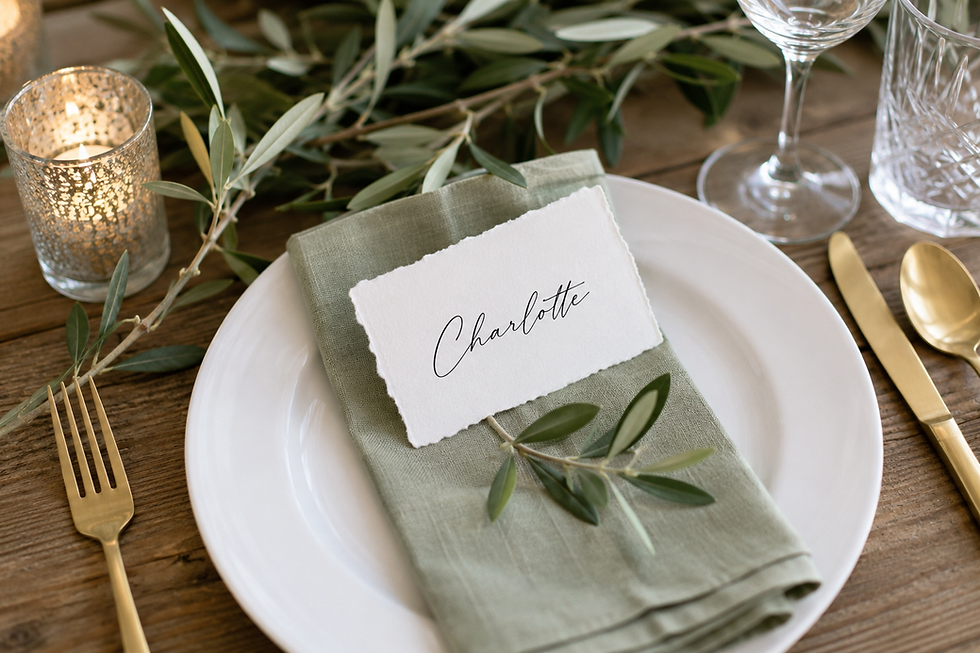
Handmade Deckled Edge Cards
Soft torn edges create a romantic and timeless look.
Ideal for rustic, countryside and vintage weddings.
Acrylic Place Cards
Clear or frosted acrylic adds a contemporary luxury finish.
These pair beautifully with gold or black calligraphy.
Watercolour Floral Place Cards
Soft floral artwork complements garden, spring and summer weddings.
Pressed Flower Place Cards
Real dried flowers attached to each card create a natural, elegant finish.
Wax Seal Place Cards
A wax seal adds texture and sophistication while matching your invitation suite.
Ribbon Place Cards
Tie each place card with silk ribbon for a soft, luxurious appearance.
Arch-Shaped Place Cards
Modern curved shapes continue to be one of the biggest wedding stationery trends.

DIY Wedding Place Cards
Making your own place cards can save money while giving you complete creative control.
You'll need:
Quality cardstock (around 300gsm)
A home printer or professional print service
Paper trimmer
Bone folder (for folded cards)
Corner rounder (optional)
Calligraphy pens (optional)
Editable templates make DIY place cards much easier, allowing you to personalise names without needing graphic design experience.
What Size Should Wedding Place Cards Be?
Some of the most common sizes include:
Style | Approximate Size |
Folded Tent Card | 90 × 50 mm |
Flat Place Card | 90 × 50 mm |
Square Place Card | 70 × 70 mm |
Arch Place Card | Around 90 × 100 mm |
Choose a size that leaves enough room for names while fitting comfortably on your table settings.
Should Wedding Place Cards Match Your Invitations?
Yes. Matching stationery creates a cohesive look throughout your wedding.
Many couples choose matching:
Save the Dates
Invitations
RSVP Cards
Details Cards
Menus
Place Cards
Table Numbers
Seating Plans
Welcome Signs
Order of the Day Signs
Thank You Cards
Using the same fonts, colours and design style helps tie everything together beautifully.
Common Wedding Place Card Mistakes
Avoid these common errors:
Misspelling guest names.
Choosing fonts that are difficult to read.
Printing names too small.
Forgetting dietary requirements if shown on the card.
Leaving printing until the last minute.
Not ordering a few spare place cards for unexpected changes.
Checking your guest list carefully before printing can save a lot of stress close to your wedding day.
How to Print Wedding Place Cards
Whether you're printing at home or using a professional printing service, choosing the right materials will help your place cards look polished and elegant.
Best Cardstock
For most weddings, a smooth cardstock between 250gsm and 350gsm provides the perfect balance of durability and quality.
Popular finishes include:
Smooth matte
Textured cardstock
Linen finish
Recycled cardstock
Soft ivory cardstock
A heavier cardstock will stand up better if you're using folded tent place cards.
Printing at Home
If you're printing yourself:
Use your printer's highest quality setting.
Print a test page before printing the full batch.
Check margins and alignment carefully.
Allow ink to dry completely before cutting.
Use a paper trimmer for crisp, straight edges.
Professional Printing
Professional printers often offer:
Sharper text
More accurate colours
Premium cardstock options
Luxury finishes such as foil or letterpress
Faster production for larger guest lists
If you're planning a large wedding, professional printing can save time while giving your stationery a premium finish.
Wedding Place Card Trends
Some of the biggest trends include:
Minimalist typography
Neutral colour palettes
Handmade paper
Arch-shaped cards
Soft watercolour florals
Sage green designs
Terracotta tones
Deckled edges
Gold foil accents
Acrylic place cards
Silk ribbon details
Wax seals
Botanical illustrations
Elegant calligraphy
Personalised guest messages
Choosing a timeless design helps ensure your wedding stationery still looks beautiful for years to come.
Frequently Asked Questions
Do I need place cards if I already have a seating plan?
Yes, if you're assigning individual seats. A seating plan tells guests which table to go to, while place cards show them exactly where to sit.
Can I use first names only?
Absolutely. Many modern weddings use first names for a more relaxed and contemporary feel.
Should children have place cards?
Yes. Giving children their own place cards helps keep seating organised and makes younger guests feel included.
Should meal choices be shown?
Many couples use discreet symbols, colours or small icons on the reverse of the card to help catering staff identify meal selections without distracting from the design.
How many place cards should I order?
Order one for every guest, plus at least five to ten extras in case of spelling corrections or last-minute guest list changes.
What font size should I use?
Generally, 12–18pt works well depending on the font. Decorative fonts should be tested to ensure they remain easy to read.
Can I print place cards myself?
Yes. Editable templates make it simple to personalise names and print at home using quality cardstock.
Do place cards need table numbers?
Not usually. If guests have already found their table using a seating plan, only their name is needed on the place card.
What paper is best?
A premium 300gsm cardstock is one of the most popular choices because it feels substantial while still printing beautifully.
Should place cards match my menus?
Yes. Matching fonts, colours and design elements create a coordinated stationery suite and elevate your table styling.
Wedding place cards may be one of the smallest pieces of wedding stationery, but they make a significant difference to the flow of your reception and the overall look of your tables.
Whether you choose a classic folded design, a modern minimalist style or luxurious acrylic place cards, thoughtful design and careful planning will help your guests feel welcomed from the moment they take their seats.
By choosing editable templates, you can easily personalise every guest's name, coordinate your stationery, and create a beautiful reception that reflects your wedding style without exceeding your budget.


