
How to Plan a Wedding: The Ultimate 18-Month Wedding Planning Checklist and Timeline

Updated: Jul 27
You are engaged. Congratulations!
After the initial excitement, one question normally appears very quickly:
Where do we actually start with wedding planning? Planning a wedding involves hundreds of decisions, from setting your budget and choosing a venue to managing your guest list, sending invitations, selecting suppliers and creating the final wedding-day schedule.
It can feel overwhelming, but you do not have to organise everything at once.
This complete wedding planning checklist breaks the process into manageable stages, beginning 18 months before the wedding and continuing through to the days after your celebration. Whether you are planning an intimate ceremony, a large traditional wedding, a destination celebration or a relaxed party, you can adapt this timeline to suit your date, budget and priorities.

Free Wedding Planning Checklist
Before you start, download our free wedding planner and keep all your important information together.
Inside, you can organise your:
Wedding budget
Guest list
Venue research
Supplier details
Payment deadlines
Wedding stationery
Seating arrangements
Meal choices
Wedding-day timeline
Final checklist
You can also use the interactive Papery Lane wedding planning tools throughout this guide.
Wedding Planning Checklist at a Glance
Here is the basic order for planning a wedding:
Celebrate your engagement.
Discuss your wedding priorities.
Set an overall budget.
Create an estimated guest list.
Choose a preferred date or season.
Research and book your venue.
Book your most important suppliers.
Choose your wedding style and colour palette.
Send save-the-dates.
Choose and order your wedding stationery.
Finalise your ceremony and reception plans.
Send wedding invitations.
Collect RSVPs and meal choices.
Create your seating plan.
Confirm final numbers with suppliers.
Prepare your wedding-day timeline.
Enjoy your wedding.
The exact order may change depending on your engagement length and the type of wedding you are planning.
What Are the First Things to Do After Getting Engaged?
You do not need to begin booking suppliers immediately. Spend some time enjoying your engagement before moving into the practical planning stage. When you are ready, begin with five essential decisions.
1. Discuss the Wedding You Both Want
Before looking at venues or creating Pinterest boards, talk openly about what each of you imagines.
Discuss:
A large or intimate wedding
Formal or relaxed
Local or destination
Traditional or unconventional
Indoor or outdoor
Daytime or evening celebration
Religious, civil or celebrant-led ceremony
Adults only or children welcome
Your preferred season
Your most important priorities
Each partner could independently choose their three biggest priorities.
These may include:
A beautiful venue
Excellent food
Photography
Live music
Wedding stationery
Flowers and styling
A particular location
A large guest list
A relaxed atmosphere
Staying within budget
Compare your answers and use the shared priorities to guide future spending.
2. Set Your Wedding Budget
Your budget affects almost every decision that follows.
Discuss:
How much you can comfortably afford
How much you can save each month
Whether anyone else is contributing
Whether contributions have conditions attached
How much contingency money you need
Which parts of the wedding matter most
Avoid booking suppliers before you understand your overall budget.
Create individual categories for:
Venue
Ceremony
Catering
Drinks
Photography
Videography
Attire
Hair and makeup
Flowers
Décor
Entertainment
Cake
Stationery
Transport
Accommodation
Rings
Gifts
Insurance
Additional fees
Emergency contingency
Try to keep part of your budget unallocated. Small additional costs can appear throughout the planning process.
3. Create an Estimated Guest List
You do not need a final list yet, but you need an approximate guest count before choosing a venue.
Create an initial list containing:
Immediate family
Extended family
Close friends
Work friends
Family friends
Partners and plus-ones
Children
Evening guests
Divide guests into groups such as:
Essential guests
Guests you would love to invite
Guests to invite if capacity permits
Evening-only guests
Your estimated guest count affects:
Venue capacity
Catering costs
Drinks packages
Invitation quantities
Table numbers
Transport
Accommodation
Wedding favours
Download the free 120-person wedding guest list template
4. Choose a Date or Season
You may prefer to choose a season or several possible dates rather than one fixed day.
Consider:
Your preferred weather
Supplier availability
Venue availability
School holidays
Bank holidays
Important family events
Work commitments
Travel requirements
Accommodation prices
Seasonal flowers
Daylight hours
Remaining flexible may give you more venue options.
5. Begin Researching Venues
Your venue will shape many other elements of the wedding.
Before arranging viewings, decide:
Preferred location
Approximate guest count
Maximum venue budget
Ceremony requirements
Accommodation requirements
Indoor and outdoor preferences
Catering preferences
Accessibility needs
Whether you want exclusive use
18 Months or More Before the Wedding
Long engagements allow you to spread decisions and payments over a greater period.
At this stage, focus on the foundations rather than small decorative details.
Your 18-Month Wedding Checklist
Announce your engagement.
Insure the engagement ring where appropriate.
Discuss your wedding vision.
Agree on your priorities.
Set an initial budget.
Create a savings plan.
Make an estimated guest list.
Decide whether to use a wedding planner.
Choose your preferred location.
Choose a season or date range.
Research ceremony options.
Research venues.
Arrange venue viewings.
Consider wedding insurance.
Create a wedding email address.
Start a wedding planning folder.
Begin collecting inspiration.
Create a Separate Wedding Email Address
A dedicated email address makes it easier to keep supplier quotes, booking confirmations and contracts together.
Use it for:
Venue enquiries
Supplier communication
Payment confirmations
Wedding website accounts
Guest questions
Competition entries
Planning tools
Start a Wedding Planning Folder
Create digital and physical folders for:
Contracts
Quotes
Invoices
Receipts
Inspiration
Guest information
Stationery wording
Supplier contact details
Payment deadlines
Ceremony documents
12 to 18 Months Before the Wedding
This is usually the main booking stage.
Popular suppliers may only accept one wedding per date, so prioritise businesses that cannot serve multiple couples simultaneously.
Your 12-to-18-Month Checklist
Book your wedding venue.
Confirm your wedding date.
Pay the venue deposit.
Read the venue contract carefully.
Confirm ceremony arrangements.
Book your photographer.
Book your videographer if required.
Book your wedding planner or coordinator.
Book your caterer if not included.
Book your main entertainment.
Begin wedding dress research.
Research guest accommodation.
Reserve accommodation where necessary.
Create your wedding website.
Prepare your save-the-dates.
Begin your stationery research.
Start researching honeymoon destinations.
Questions to Ask Before Booking a Wedding Venue
Ask every venue the same questions so you can compare them fairly.
Capacity and Access
What is the maximum daytime capacity?
What is the maximum evening capacity?
Is the venue accessible?
Are accessible toilets available?
Is there suitable parking?
Can guests leave cars overnight?
Is public transport available nearby?
Ceremony
Can we hold the ceremony at the venue?
Which ceremony spaces are available?
Is there a separate indoor backup space?
How many guests can each space hold?
What time can the ceremony begin?
Catering and Drinks
Is catering included?
Can we use an external caterer?
Can dietary requirements be accommodated?
Are children’s meals available?
Is there a minimum food or drink spend?
Can we provide our own drinks?
Are corkage charges applied?
Suppliers and Styling
Do we need to use recommended suppliers?
When can suppliers access the venue?
Are candles or confetti permitted?
What decorations are included?
When must decorations be removed?
Is furniture included?
Are table linens included?
Timing and Accommodation
What time can we arrive?
What time must the celebration end?
Is there an evening noise limit?
Is accommodation available?
Is breakfast included?
What is the checkout time?
Record every answer before signing a contract.
9 to 12 Months Before the Wedding
Once the date and venue are secure, begin shaping the appearance and atmosphere of the wedding.
Your 9-to-12-Month Checklist
Choose your overall wedding style.
Select a colour palette.
Order your wedding dress.
Choose the wedding party.
Shop for wedding party outfits.
Book your florist.
Book your hair stylist.
Book your makeup artist.
Book your cake maker.
Book ceremony musicians.
Book transport.
Book guest accommodation.
Send save-the-dates.
Begin designing your invitations.
Create your wedding website.
Add accommodation and travel information.
Research honeymoon options.
Check passport validity.
Begin planning pre-wedding celebrations.
Choose Your Wedding Style
Your wedding style can guide your stationery, flowers, attire and décor.
Popular directions include:
Minimalist
Romantic
Modern
Botanical
Rustic
Luxury
Classic
Colourful
Vintage
Coastal
Garden-inspired
Destination-inspired
You do not need every detail to match perfectly. A consistent colour palette and typography style can make the overall wedding feel connected.
Send Your Save-the-Dates
Save-the-dates are particularly useful when:
Guests need to travel
Accommodation is limited
Your date falls during a holiday period
You are planning a destination wedding
Many guests need to arrange childcare
The wedding is on a weekday
Include:
Your names
Wedding date
General location
A note that the formal invitation will follow
Your wedding website, when available

6 to 9 Months Before the Wedding
At this point, the main structure should be established.
Now you can concentrate on guest communication, ceremony details and the experience you want to create.
Your 6-to-9-Month Checklist
Finalise your wedding invitation design.
Confirm invitation wording.
Collect guest addresses.
Order invitation samples.
Order your wedding invitations.
Choose RSVP options.
Select your wedding rings.
Book additional entertainment.
Book a photo booth if required.
Book décor or styling services.
Plan ceremony readings.
Choose ceremony music.
Begin writing vows if appropriate.
Organise wedding party accessories.
Plan your honeymoon.
Book honeymoon travel.
Arrange travel insurance.
Research legal ceremony requirements.
Begin planning the wedding-day schedule.
Attend menu tastings.
Attend cake tastings.
Choose Your Wedding Invitations
Your invitation is often the first detailed glimpse guests receive of your celebration.
It should communicate the style of the wedding while making the important information easy to understand.
A wedding invitation suite may contain:
Main wedding invitation
RSVP card
Guest information card
Accommodation card
Directions card
Menu card
Wedding website details
You may also need separate invitations for:
Day guests
Evening guests
Children
Additional celebrations
For a coordinated design across the entire celebration:
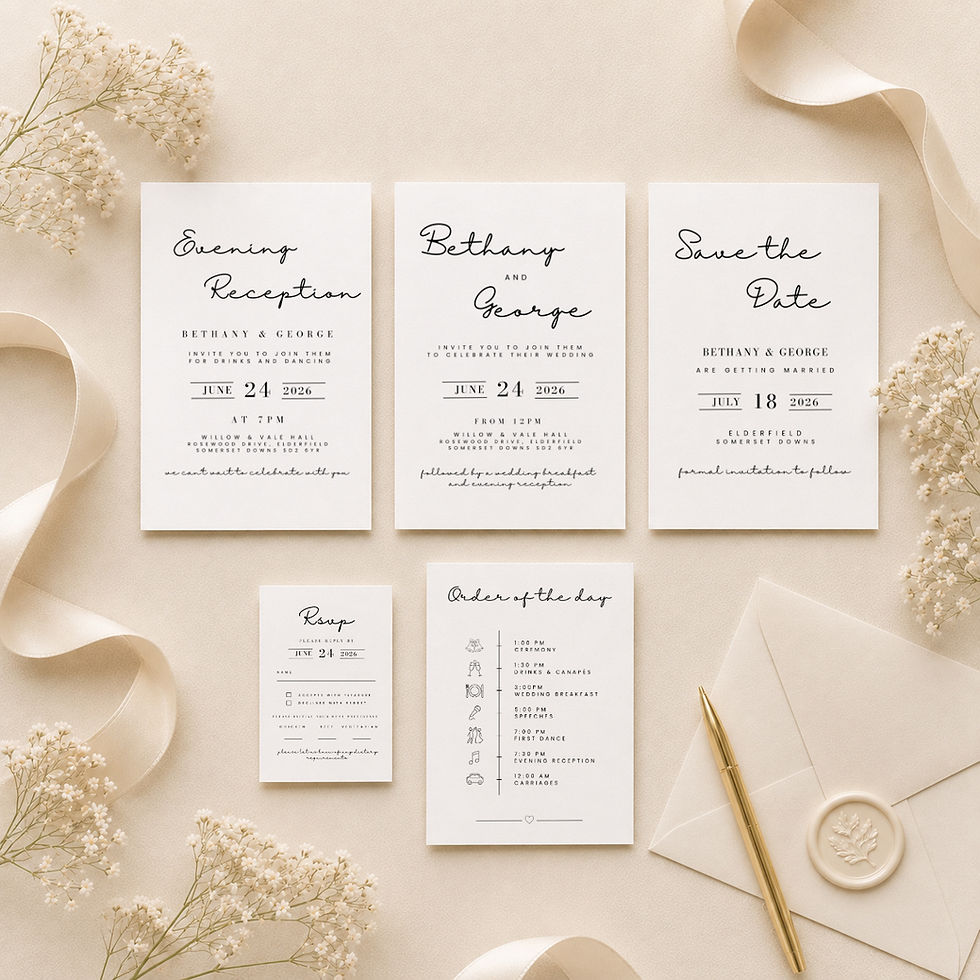
Decide What to Include on the Invitation
Your main invitation should normally include:
The couple’s names
The wedding date
Ceremony time
Venue name
Venue location
RSVP deadline
How to respond
Additional information can be placed on a separate card or wedding website.
This may include:
Accommodation
Transport
Parking
Dress code
Gift preferences
Children policy
Plus-one information
Menu options
Directions
Wedding website details
4 to 6 Months Before the Wedding
This is the stage when your plans begin moving from ideas into confirmed details.
Your 4-to-6-Month Checklist
Send wedding invitations.
Record invitations as they are sent.
Track RSVP responses.
Confirm meal choices.
Confirm dietary requirements.
Confirm approved plus-ones.
Plan hen, stag or joint celebrations.
Arrange attire alterations.
Choose wedding party gifts.
Choose ceremony readings.
Confirm your ceremony structure.
Choose reception music.
Create a photography wish list.
Plan floral arrangements.
Confirm venue styling.
Choose table decorations.
Order wedding signs.
Order menus and table numbers.
Decide on wedding favours.
Arrange childcare if provided.
Confirm transport arrangements.
Plan a wet-weather alternative.
Begin your seating plan.
Create an RSVP System
Record every response in one central place.
Track:
Guest name
Household
Attending or declining
Day or evening attendance
Plus-one
Children
Meal choice
Dietary requirements
Accessibility requirements
Accommodation
Transport
Table assignment
Do not rely on messages scattered across different apps.
Use the free wedding guest list planner
Start Your Seating Plan Early
You do not need to finalise tables yet, but you can begin grouping guests.
Consider:
Family relationships
Friendship groups
Children
Accessibility needs
Guests attending alone
Guests who know very few people
Potential disagreements
Space required for highchairs or mobility aids
2 to 3 Months Before the Wedding
The wedding is approaching, and your focus should shift towards final decisions.
Your Two-to-Three-Month Checklist
Chase outstanding RSVPs.
Confirm your final guest list.
Finalise the seating plan.
Confirm table names or numbers.
Confirm meal selections.
Order place cards.
Order menu cards.
Order your seating plan.
Order your welcome sign.
Order your order-of-the-day sign.
Finalise ceremony readings.
Finalise vows.
Confirm the ceremony music.
Confirm reception music.
Confirm the first-dance song.
Finalise your wedding-day timeline.
Attend hair and makeup trials.
Attend final outfit fittings.
Wear in wedding shoes.
Purchase wedding accessories.
Confirm wedding party duties.
Confirm transport times.
Confirm supplier arrival times.
Prepare final venue questions.
Purchase gifts.
Prepare an emergency kit.
Order Your On-the-Day Wedding Stationery
Once your guest list and seating plan are nearly final, order:
Welcome sign
Order-of-the-day sign
Seating plan
Table numbers
Place cards
Menu cards
Drinks menus
Ceremony programmes
Reserved-seat signs
Guest book sign
Cards and gifts sign
Using one coordinated collection can make the ceremony and reception spaces feel more polished. Shop wedding stationery bundles
Create Your Wedding Music Plan
Choose music for:
Guest arrival
Wedding party entrance
Main ceremony entrance
Signing or ceremony interval
Ceremony exit
Drinks reception
Wedding breakfast
Couple’s entrance
Speeches
Cake cutting
First dance
Evening celebration
Final song
One Month Before the Wedding
Avoid introducing major new ideas during the final month.
Your goal is to confirm, organise and communicate.
Your One-Month Wedding Checklist
Confirm final numbers with the venue.
Confirm final numbers with the caterer.
Confirm dietary requirements.
Confirm children’s meals.
Confirm supplier meals.
Pay final balances.
Review every contract.
Confirm supplier contact information.
Confirm supplier arrival times.
Confirm setup responsibilities.
Confirm collection arrangements.
Send the final timeline to suppliers.
Send the final timeline to the wedding party.
Confirm the seating plan.
Print guest information.
Prepare payment or gratuity envelopes where required.
Collect wedding outfits.
Collect wedding rings.
Prepare ceremony documents.
Pack decorations.
Prepare an emergency kit.
Check the weather forecast closer to the date.
Confirm the wet-weather plan.
Prepare honeymoon documents.
Arrange care for pets.
Arrange home security while away.
Confirm Every Supplier in Writing
Send each supplier a final confirmation containing:
Wedding date
Venue address
Arrival time
Setup instructions
Main contact
Emergency contact
Final service details
Final payment status
Collection arrangements
Relevant venue restrictions
Keep copies accessible offline.
Two Weeks Before the Wedding
Your Two-Week Checklist
Confirm the final guest list.
Provide table plans to the venue.
Provide dietary requirements to the caterer.
Prepare place cards.
Prepare wedding favours.
Prepare supplier meals.
Confirm speeches.
Confirm readings.
Practise vows.
Confirm music files or playlists.
Prepare a photography list.
Prepare a family group-photo list.
Pack venue decorations.
Pack overnight bags.
Pack honeymoon luggage.
Check passports and travel documents.
Arrange wedding attire collection.
Confirm wedding party transport.
Confirm who will take gifts home.
Confirm who will return hired items.
Delegate wedding-day responsibilities.
One Week Before the Wedding
Your Final Wedding Week Checklist
Check the latest weather forecast.
Confirm any weather-related changes.
Reconfirm transport.
Reconfirm accommodation.
Reconfirm supplier arrivals.
Prepare ceremony documents.
Pack an emergency kit.
Steam or prepare outfits.
Collect hired clothing.
Collect wedding rings.
Collect stationery and signs.
Charge phones and portable chargers.
Download important contact details.
Prepare cash or payment envelopes.
Prepare snacks and drinks for the morning.
Confirm breakfast arrangements.
Avoid making unnecessary last-minute changes.
Make time to rest.
The Day Before the Wedding
The day before should be used for final preparation, not major planning.
Day-Before Checklist
Deliver approved items to the venue.
Confirm where outfits and accessories are stored.
Check rings are secure.
Check ceremony documents are ready.
Charge your phone.
Set alarms.
Eat a proper meal.
Drink water.
Avoid trying unfamiliar beauty products.
Confirm the morning schedule.
Give important items to trusted people.
Get an early night where possible.
Prepare one clearly labelled bag containing:
Rings
Ceremony documents
Vows
Emergency supplies
Medication
Phone charger
Comfortable shoes
Touch-up products
Snacks
Water
Supplier contact list
Copies of the timeline
Wedding Day Checklist
You should not be personally coordinating every supplier on your wedding day. Appoint a trusted contact, coordinator or member of the wedding party to answer practical questions.
Wedding Morning
Eat breakfast.
Drink water.
Follow the hair and makeup schedule.
Keep the getting-ready space organised.
Keep important items together.
Give the rings to the responsible person.
Give supplier contacts to the coordinator.
Allow additional time for photographs.
Keep the room as calm as possible.
Before the Ceremony
Confirm transport has arrived.
Check bouquets and buttonholes.
Check ceremony documents.
Confirm the wedding party order.
Take a final comfort break.
Silence phones.
Take a moment to breathe.
During the Reception
Ask someone else to track timing.
Make sure important guests are included in photographs.
Confirm speeches are ready.
Eat and drink.
Spend time together.
Allow small delays without worrying.
Enjoy the celebration you planned.
Sample Wedding Day Timeline
Every wedding is different, but this example can help you build your own schedule.
Example Timeline for a 2:00 pm Ceremony
8:00 am – Breakfast and preparation begins
9:00 am – Hair and makeup begins
11:00 am – Photographer arrives
12:00 pm – Flowers delivered
12:30 pm – Wedding party gets dressed
1:00 pm – Final getting-ready photographs
1:15 pm – Guests begin arriving
1:30 pm – Wedding party departs
2:00 pm – Ceremony begins
2:30 pm – Ceremony ends
2:40 pm – Confetti and group photographs
3:00 pm – Drinks reception
4:15 pm – Guests invited to take their seats
4:30 pm – Couple enters the wedding breakfast
4:45 pm – Meal served
6:30 pm – Speeches
7:15 pm – Evening guests arrive
7:45 pm – Cake cutting
8:00 pm – First dance
8:10 pm – Evening celebration begins
9:00 pm – Evening food served
11:45 pm – Final song
12:00 am – Celebration ends
Build a personalised schedule based on your ceremony time, venue and chosen traditions.

Complete Wedding Budget Checklist
Your budget should include more than the obvious venue and supplier costs.
Ceremony
Ceremony venue
Registration or officiant costs
Ceremony musicians
Ceremony flowers
Programmes
Reserved seating
Confetti
Legal documents
Reception
Venue hire
Catering
Drinks
Furniture
Table linen
Lighting
Décor
Cake
Entertainment
Evening food
Cleanup
Security
Attire and Beauty
Wedding dress or outfit
Alterations
Shoes
Accessories
Suit or formalwear
Wedding party clothing
Hair
Makeup
Trials
Nails
Grooming
Photography and Entertainment
Photographer
Videographer
Photo albums
Band
DJ
Musicians
Photo booth
Additional performers
Stationery
Save-the-dates
Wedding invitations
RSVP cards
Information cards
Envelopes
Postage
Welcome sign
Seating plan
Place cards
Menus
Table numbers
Order-of-the-day sign
Thank-you cards
Additional Costs
Transport
Accommodation
Wedding rings
Insurance
Gifts
Favours
Childcare
Pet care
Supplier meals
Delivery
Setup
Collection
Tips
Emergency purchases
Wedding Guest List Checklist
For every guest, record:
Full name
Household
Postal address
Email address
Phone number
Day or evening invitation
Invitation sent
RSVP received
Attending or declining
Plus-one
Children
Meal choice
Dietary requirements
Accessibility requirements
Accommodation
Transport
Table assignment
Gift received
Thank-you card sent
Keeping this information together will make your invitations, catering and seating plan significantly easier to manage.
Wedding Stationery Checklist
Before the Wedding
Engagement announcement
Save-the-date
Wedding invitation
Evening invitation
RSVP card
Information card
Accommodation card
Directions card
Wedding website card
Ceremony and Reception
Welcome sign
Ceremony programme
Order-of-the-day sign
Seating plan
Table numbers
Place cards
Menu cards
Drinks menus
Reserved signs
Guest book sign
Cards and gifts sign
Favour tags
After the Wedding
Thank-you cards
Wedding photograph cards
Change-of-address cards where relevant
Editable templates allow you to personalise your names, wording and wedding information before downloading the finished design.
What Can Be Left Until Later?
Couples sometimes begin with the most enjoyable details before securing the essentials.
Avoid prioritising these too early:
Table names
Wedding favours
Guest book wording
Cake topper
Place-card details
Decorative signs
Final playlists
Seating arrangements
These choices are easier once your venue, guest list and overall style are confirmed.
Common Wedding Planning Mistakes
Booking Before Setting a Budget
A series of individually affordable bookings can collectively take you over budget.
Track the full cost before paying deposits.
Choosing a Venue Before Estimating Guest Numbers
A venue that is too small creates difficult guest-list decisions. A venue that is too large may feel empty or cost more to style.
Forgetting Additional Charges
Ask about:
Service fees
Delivery
Setup
Cleanup
Corkage
Overtime
Insurance
Alterations
Postage
Supplier travel
Minimum spends
Sending Invitations Without an RSVP System
Create your tracking system before invitations are sent.
Leaving the Seating Plan Too Late
Begin grouping guests early and finalise the layout after your RSVP deadline.
Trying to Please Everyone
Listen to advice, but remember that the wedding should reflect the couple getting married.
Planning Every Minute
A clear structure is useful, but your schedule should contain enough flexibility for small delays.
Forgetting to Delegate
Give reliable people specific responsibilities rather than trying to manage everything personally.
Frequently Asked Questions
How do I start planning a wedding?
Begin by discussing your priorities, setting a budget, estimating your guest count and choosing a preferred date or season. These decisions will guide your venue search and supplier bookings.
What should be booked first for a wedding?
The venue is normally the first major booking because it confirms the date and location. After that, prioritise suppliers who can only accept one wedding per date, such as photographers, videographers, planners and entertainment providers.
Do you choose the venue or guest list first?
Create an estimated guest list before booking the venue. You need to understand the approximate capacity required, but the guest list does not need to be completely final.
How long does it take to plan a wedding?
There is no required planning period. Some couples organise weddings within a few months, while others plan over one or two years. Adapt the checklist to your engagement length.
Can you plan a wedding in six months?
Yes. Begin immediately with your budget, guest list, venue and key suppliers. Choose available options decisively and use digital planning tools to keep deadlines organised.
Can you plan a wedding in three months?
A three-month wedding is possible, particularly for a smaller or less traditional celebration. Venue and supplier availability will determine many decisions, so flexibility is important.
When should wedding invitations be sent?
Choose a date that gives guests enough time to respond and leaves you enough time to finalise numbers with the venue. Send them earlier when guests need to arrange extensive travel, accommodation or childcare.
When should the RSVP deadline be?
Place the deadline comfortably before the date your venue and caterer require final numbers. Leave additional time to contact guests who do not respond.
When should we create the seating plan?
Begin considering table groups while RSVPs are being collected. Finalise the seating plan once attendance is confirmed and before ordering personalised place cards or the printed seating chart.
What wedding stationery do we need?
Most couples need invitations and some form of RSVP information. Depending on your celebration, you may also want save-the-dates, information cards, a welcome sign, seating plan, table numbers, menus, place cards and thank-you cards.
Do all wedding stationery designs need to match?
They do not have to match, but using coordinated colours, fonts and design elements can create a consistent style across your wedding.
What is the most important wedding planning advice?
Make decisions in the correct order. Establish your budget, guest count, date and venue before concentrating on smaller details. Keep written records, read contracts carefully and plan a wedding that reflects your own priorities.
Your Complete Wedding Planning Journey
Wedding planning becomes much easier when each decision is handled at the appropriate time.
Start with the foundations:
Your priorities
Your budget
Your guest list
Your date
Your venue
Then move through suppliers, attire, stationery, ceremony details, guest management and the wedding-day schedule. You do not need to plan the entire wedding in one weekend. Work through the checklist gradually, keep your information organised and focus on creating a celebration that feels personal to you.
Start Planning Your Wedding Today
Use Papery Lane’s free wedding planning tools to organise every stage of your celebration:
Download the free wedding planner
Organise your wedding guest list
When you are ready to bring your wedding style together, explore our editable stationery.
Every template can be personalised for your own celebration, giving you beautifully coordinated wedding stationery without the cost of completely bespoke design


